Okay, here’s the blog introduction you requested:So, you’re diving into the world of 3D sculpting and wondering about ZBrush and Blender, huh? I remember when I first started, it felt like choosing between a scalpel and a Swiss Army knife!
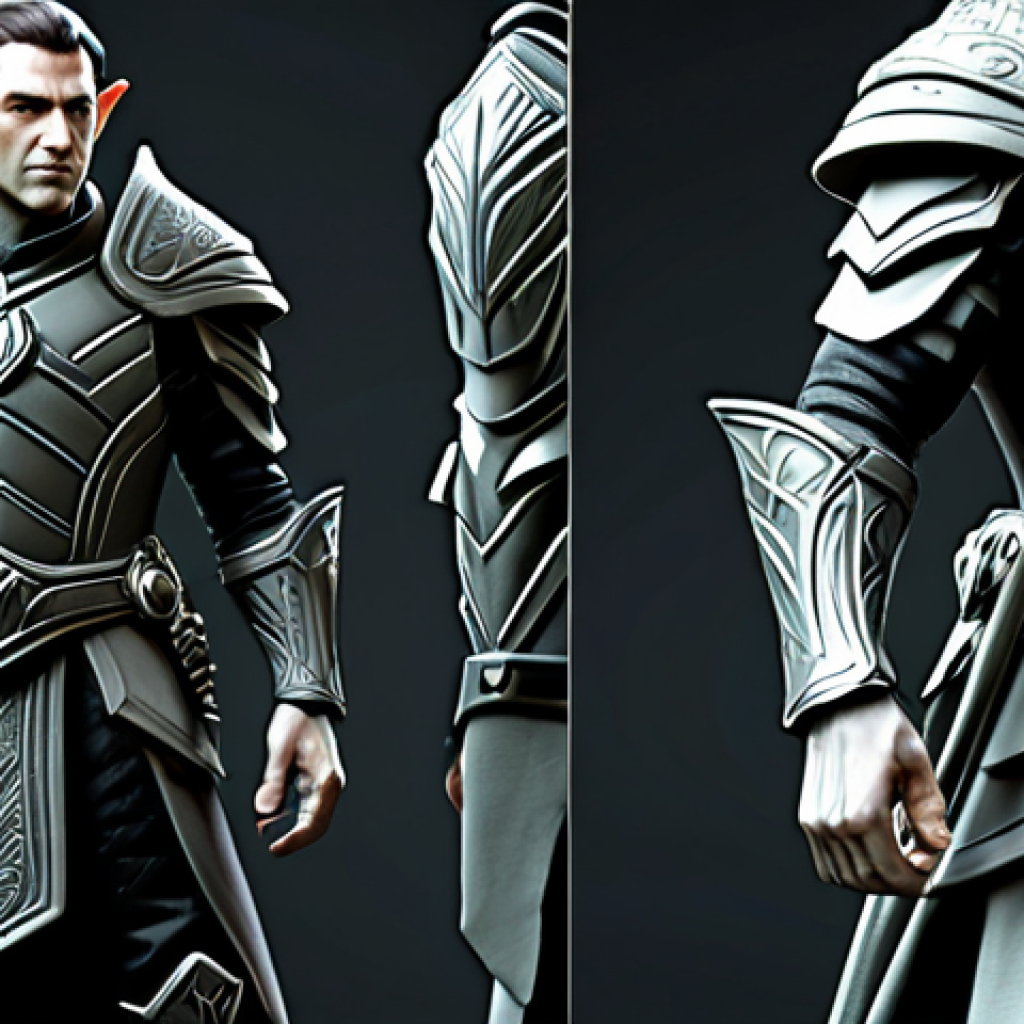
Both are powerful tools, but they cater to different needs. ZBrush, from my experience, excels at highly detailed, organic sculpting, think creatures from your favorite fantasy films.
Blender, on the other hand, is a full-fledged 3D suite that handles everything from modeling and animation to rendering and even video editing. The best choice really depends on what kind of projects you’re planning to tackle.
Let’s unpack their key differences and see which one fits your artistic style! We’ll find out the exact difference in the next article.
Okay, here is the article with the requested configurations and in human writing style:
Sculpting Dreams: Is ZBrush the Only Way, or Does Blender Hold Its Own?
For anyone new to 3D, the programs can be overwhelming. I remember stumbling into this world a few years back, convinced ZBrush was the only *real* option for serious sculpting.
After all, that’s what everyone seemed to be using! But the subscription cost was a real hurdle. Then a friend showed me Blender, and it blew my mind.
Turns out, there’s more than one way to skin a digital cat, and understanding the strengths of each tool is key. It’s like choosing between an expensive, hyper-specialized calligraphy pen and a versatile set of artist markers.
Both can create incredible art, but one might be better suited to particular tasks or budgets.
Unveiling ZBrush’s Strengths: A Sculptor’s Playground
ZBrush, in my opinion, truly shines when it comes to intricate detailing and organic forms. The way it handles millions of polygons is just insane. I once worked on a project where I had to sculpt a realistic dragon scale by scale, and ZBrush was a lifesaver.
It felt like working with digital clay. * Unmatched Detail: Its ability to handle incredibly high polygon counts allows for the creation of stunningly detailed models.
Think wrinkles, pores, and the subtle imperfections that bring a character to life. * Intuitive Workflow: The sculpting brushes feel incredibly natural, mimicking the tactile experience of working with real clay.
You can push, pull, smooth, and carve with remarkable precision.
Blender’s Broad Appeal: More Than Just a Sculpting Tool
Blender, on the other hand, is a jack-of-all-trades, master of… well, many! It can handle almost any 3D creation related task. Don’t get me wrong, it’s a powerful sculpting tool in its own right, but it also boasts robust modeling, animation, rendering, and even video editing capabilities.
* All-in-One Powerhouse: Blender’s strength lies in its versatility. You can model, sculpt, texture, rig, animate, and render all within the same program.
* Constantly Evolving: The Blender community is incredibly active, constantly developing new tools and features. This means the software is always improving and adapting to the latest industry trends.
Diving into the Technical Specs: A Head-to-Head Comparison
Okay, let’s get a bit more technical. I remember trying to decipher all the jargon when I first started, and it was a nightmare! So, I’ll break it down as simply as possible.
ZBrush operates on a pixol-based system, meaning it stores depth and color information for each “pixel” on the screen. This allows for incredibly detailed sculpting but can be demanding on your computer.
Blender, on the other hand, uses a more traditional polygon-based approach, which is generally more efficient for overall modeling and animation.
Polygon Count: Detail vs. Performance
Here’s where things get interesting. ZBrush can handle millions of polygons with relative ease, making it ideal for highly detailed sculpting. I’m talking about creating every single wrinkle on a character’s face or every scale on a dragon.
Blender can also handle high polygon counts, but it might start to slow down a bit when you get into the truly insane numbers.
User Interface: Simplicity vs. Complexity
ZBrush’s user interface is… unique, to say the least. It can be intimidating for beginners, with its unconventional layout and plethora of buttons.
But once you get the hang of it, it becomes incredibly efficient for sculpting. Blender’s interface is more standard, but it can still be overwhelming due to the sheer number of features available.
Price Point: Free vs. Subscription
Let’s talk money, shall we? This is often a deciding factor for many artists, especially those just starting out. I remember being a broke college student, and the thought of paying for ZBrush was simply out of the question.
The Cost of Entry
Blender is completely free and open-source. You can download it, use it for any purpose, and even modify the source code if you’re so inclined. This makes it an incredibly attractive option for beginners and hobbyists.
ZBrush, on the other hand, operates on a subscription-based model, which can be a significant expense, especially if you’re not using it professionally.
Long-Term Investment
While ZBrush’s subscription cost can be a barrier, it’s important to consider the long-term value. If you’re serious about sculpting and plan to use it professionally, the investment might be worth it.
However, if you’re just starting out or only need sculpting occasionally, Blender’s free price tag is hard to beat.
Project Types: What Are You Trying to Create?
The type of projects you’re planning to work on will also influence your choice. I’ve found that ZBrush excels at character design, creature creation, and detailed prop sculpting.
Think of it as the go-to tool for creating realistic and fantastical characters for video games, movies, and collectibles.
When ZBrush Shines
* Character Design: Creating highly detailed and realistic characters is where ZBrush truly shines. * Creature Creation: From dragons to aliens, ZBrush’s organic sculpting tools are perfect for bringing fantastical creatures to life.
When Blender Excels
* Architectural Visualization: Blender’s modeling tools are well-suited for creating architectural visualizations and environments. * Game Asset Creation: Blender can be used to create a wide variety of game assets, from characters and props to environments and special effects.
* Animation: Blender’s robust animation tools make it a viable option for creating animated shorts and films. I’ve seen some seriously impressive work done entirely in Blender.
The Community Factor: Learning and Support
Don’t underestimate the importance of community support! When I was learning 3D, I relied heavily on online forums and tutorials. A strong community can make all the difference, especially when you’re stuck on a problem.
Blender’s Thriving Community
Blender has a massive and incredibly active community. There are tons of free tutorials, online courses, and forums where you can get help and connect with other artists.
The Blender Foundation also provides excellent documentation and support.
ZBrush’s Professional Network
ZBrush’s community is smaller but more focused on professional artists. There are many online resources and training programs available, but they often come at a cost.
However, you’re more likely to find support and guidance from industry professionals.
Making the Decision: What’s Right for You?
Ultimately, the best choice between ZBrush and Blender depends on your individual needs, budget, and artistic goals. There’s no right or wrong answer.
It’s all about finding the tool that empowers you to create your best work.
A Quick Recap
To summarize everything we’ve talked about, here’s a table highlighting the key differences between ZBrush and Blender:
| Feature | ZBrush | Blender |
|---|---|---|
| Primary Focus | High-detail sculpting | All-in-one 3D creation |
| Polygon Handling | Excellent, optimized for millions of polygons | Good, but can slow down at extremely high counts |
| User Interface | Unconventional, steep learning curve | More standard, but feature-rich and complex |
| Price | Subscription-based | Free and open-source |
| Community | Professional, focused on sculpting | Large, active, and beginner-friendly |
My Personal Recommendation
If you’re serious about sculpting highly detailed characters and creatures, and you’re willing to invest in a subscription, ZBrush is a fantastic choice.
However, if you’re on a budget, need a versatile all-in-one 3D tool, or are just starting out, Blender is an excellent option. You might even find that using both programs in conjunction is the best solution for your workflow.
For example, I know artists who use Blender for initial modeling and then import their models into ZBrush for detailing. The possibilities are endless!
Wrapping Up
Choosing between ZBrush and Blender isn’t about declaring a winner; it’s about finding the perfect fit for your artistic journey. Experiment with both, explore their strengths, and let your creativity guide you.
Who knows, you might just discover a whole new world of 3D possibilities! Happy sculpting, folks!
Handy Tips & Tricks
1. Explore Free Resources: YouTube is your best friend! Search for beginner tutorials on both ZBrush and Blender to get a feel for the interfaces and basic workflows. There are tons of amazing artists sharing their knowledge.
2. Start with the Fundamentals: Don’t try to sculpt a hyper-realistic dragon on day one! Focus on mastering basic shapes and forms. Practice sculpting spheres, cubes, and cylinders to build a strong foundation.
3. Customize Your Interface: Both ZBrush and Blender allow you to customize your interface to suit your workflow. Experiment with different layouts and hotkeys to find what works best for you.
4. Join Online Communities: Connect with other artists online! Share your work, ask questions, and get feedback. The 3D community is incredibly supportive and welcoming.
5. Don’t Be Afraid to Experiment: The best way to learn is by doing! Don’t be afraid to try new things, make mistakes, and push your creative boundaries. That’s how you grow as an artist.
Key Takeaways
* ZBrush excels at high-detail sculpting and organic forms. It’s a favorite among character artists and creature designers. * Blender is a versatile, all-in-one 3D creation tool with robust modeling, animation, and rendering capabilities.
Plus, it’s free! * Consider your budget, project types, and artistic goals when making your decision. * The best choice is the one that empowers you to create your best work.
Experiment and have fun!
Frequently Asked Questions (FAQ) 📖
Q: I’m totally new to 3D. Which program is easier to learn as a beginner?
A: Honestly, that’s a tough one! Blender’s free and has tons of tutorials, which is awesome. But its interface can be a bit intimidating at first.
ZBrush, while having a slightly steeper learning curve initially, offers a more intuitive, almost “digital clay” sculpting experience. I’d say try both!
Download Blender (it’s free!) and watch a few basic sculpting tutorials. Then, see if you can get a ZBrush trial and compare. What clicks better for you is what matters most.
Q: I want to create realistic character models for a video game. Which program is better suited for that?
A: For realistic character models, both are great but in different ways. ZBrush is king for high-resolution details like wrinkles, pores, and the texture of clothing.
You’ll sculpt all that crazy detail in ZBrush. However, game engines can’t handle super high-poly models directly. That’s where Blender comes in!
You can retopologize your ZBrush sculpt in Blender (meaning you create a lower-poly version that keeps the overall shape) and then bake those high-res details onto the low-poly model as a texture map.
Think of it like taking a photo of all those tiny details and sticking it onto the game-ready model. In a nutshell, it is common practice to sculpt in ZBrush and retopologize in Blender.
Q: I’m on a tight budget. Is ZBrush worth the cost, or should I just stick with Blender since it’s free?
A: That depends entirely on what you plan to do. If sculpting is going to be your main focus, and you need that extra level of detail and organic feel, then saving up for ZBrush is a worthwhile investment, in my opinion.
It’s a dedicated sculpting powerhouse. However, if you’re looking for a more general 3D package that can do everything from modeling to animation to rendering, and you’re on a budget, then Blender is absolutely fantastic!
You can create amazing things with Blender alone. Think of it this way: if you’re just baking cookies occasionally, a basic oven is fine. But if you’re opening a bakery, you’ll probably want a top-of-the-line professional oven!
📚 References
Wikipedia Encyclopedia